Story first
The trouble earns the lesson
Weather, arguments, and one badly timed hamster come first. Anything useful has to arrive inside the adventure.
For readers who wantMore story. Still plenty of pictures.
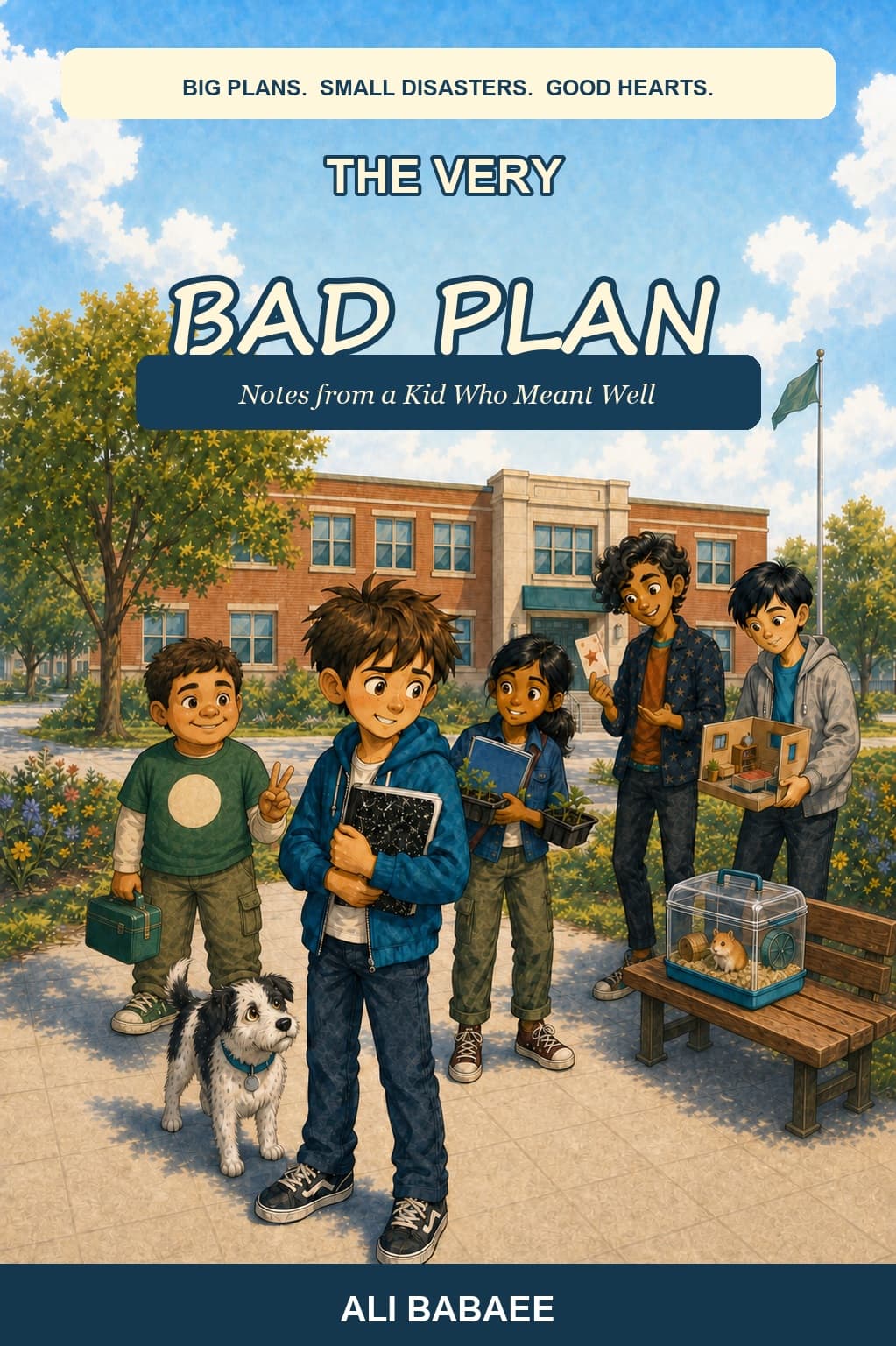
Five friends. One school project. A hamster who has not read the instructions.
A funny illustrated chapter book for ages 9–12. 50 short chapters, 100+ pictures, and a plan that keeps getting away from Sam.
Real pages. The whole first chapter. No signup.
Warning: contains
unexpected weather
No perfect children
required
Chapter 1. Yours to read.
Same notebook. Very different first impression. Meet Sam on the Monday it all begins.
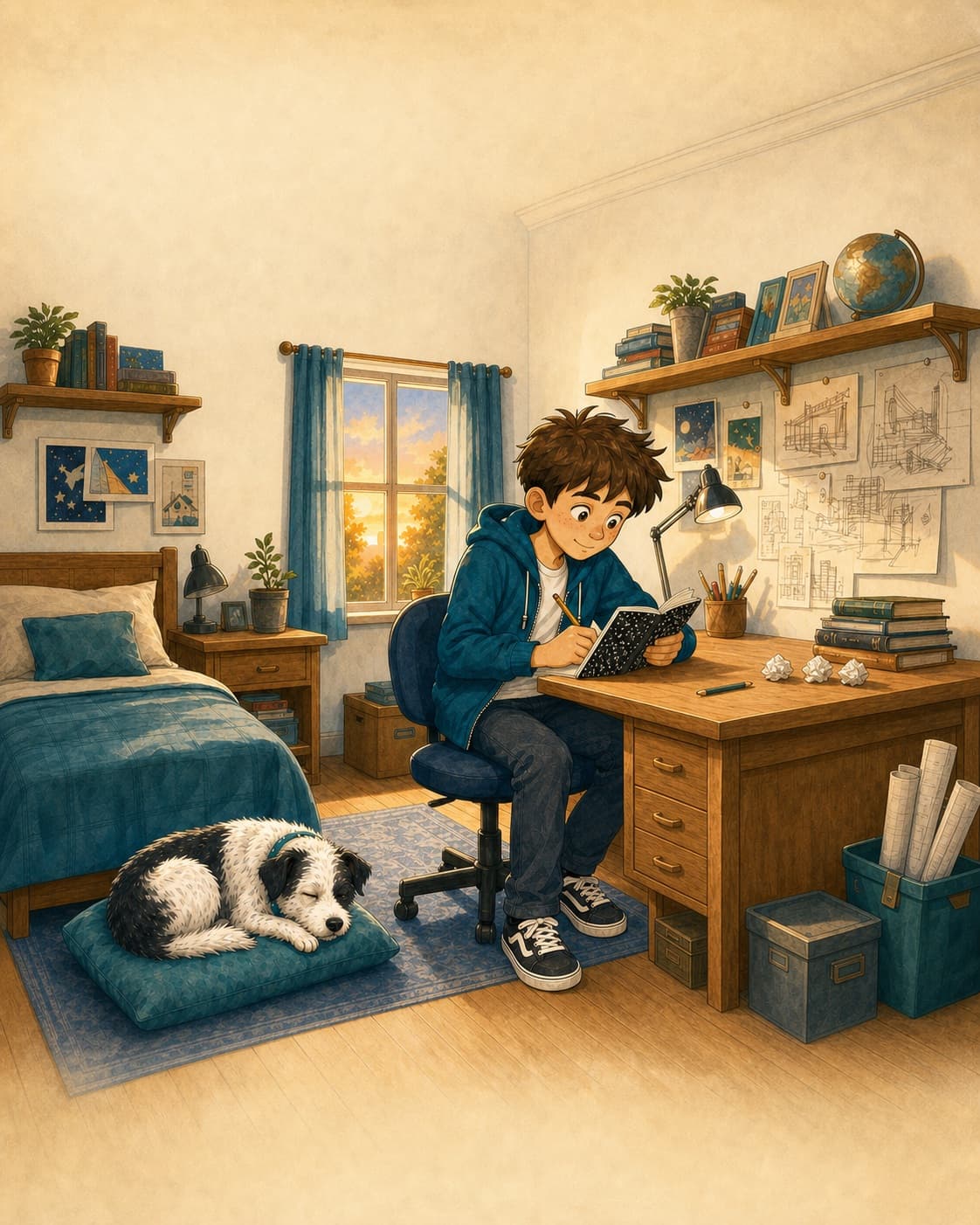
No email. No signup. Just the first chapter.
Choosing for someone else? A little help →Chapter 1Monday
This notebook was supposed to say SAM CARTER: IMPORTANT IDEAS on the front.
Instead, it says SUN CARTON: IMPORTED OLIVES.
The man at the discount print shop said the machine had “experienced a lettering event.” Mom said the notebook was still perfectly usable. Adults say things like this when their name is not Sun Carton.
I tried to cover the words with a sticker, but the only one in the kitchen drawer said GREAT JOB AT THE DENTIST! Now my notebook looks like imported olives had a successful appointment.
Still, I need a notebook, and this is the one I have.
Today was the first day of sixth grade at Maple Ridge School, and Mrs. Green gave us an assignment called ONE GOAL FOR THE YEAR. Most people wrote normal things.
Mia wrote, “Improve my public speaking.”
Omar wrote, “Learn three card tricks that do not end with someone calling for help.”
Ben wrote, “Eat a vegetable without being surprised by it.”
Mrs. Green read his goal twice.
I left my paper blank because my real goal felt too big to fit in the little box.
Here it is:
Before this school year ends, I want to do something at Maple Ridge that people will still talk about next year.
Last year, the yearbook listed me as “Samuel Crater.” In the class photo, I was standing behind a tall kid named Marcus, so the only visible part of me was one ear.
One ear is not the kind of legacy a person hopes for.
It was not only the yearbook. Teachers remembered Mia’s perfect folders, Omar’s tricks, and Ben’s ability to turn lunch into an incident report. When people described me, they usually paused first. I wanted to be the kind of person whose name arrived before the pause.
That is not the same as wanting to be famous. Famous people cannot buy cereal without appearing in a photograph. I only wanted proof that I had occupied more space in the school than one ear behind Marcus.
At lunch, I told Ben about my goal.
“You could grow another ear,” he said. “Then at least the yearbook would show fifty percent of you.”
I told him ears were not the point.
So we made a list titled WAYS TO BECOME UNFORGETTABLE:
1. Win a trophy.
2. Invent something useful.
3. Lead an important project.
4. Get my name in the school newspaper.
5. Save someone from mild danger.
Ben added number six: Eat the cafeteria’s gray soup and live.
I crossed that one out. Becoming unforgettable is no use if you are not around to enjoy it.
After lunch, Mrs. Green asked us to share our goals. When it was my turn, I decided to say something sensible.
“I want to contribute meaningfully to the school community,” I said.
The sentence sounded excellent in my head.
Out loud, I accidentally said, “I want to confuse the school community.”
Omar clapped. Ben nodded like this was exactly the goal we had discussed.
Mrs. Green waited.
“Contribute,” I corrected. “I meant contribute.”
“A worthwhile goal,” she said, but she was smiling.
On the walk home, I opened the notebook and wrote THE VERY GOOD PLAN at the top of the first page.
Then Pickles pulled the leash, I tripped over a recycling bin, and my pen slashed a black line through GOOD.
Now it says THE VERY BAD PLAN.
Honestly, THE VERY BAD PLAN might be more accurate.
NOTE TO FUTURE ME #1: If your plan begins with a spelling mistake and ends in a recycling bin, keep the notebook. You may need evidence.
End of Chapter 1. The trouble has only just started.
49 more chapters. The same complete story in every edition.
Four stages of a very bad plan
Sam believes preparation can stop surprises. The project does not share this belief.
Boxes. Arrows. Jobs for everyone. The sort of plan that looks excellent before anyone has tried it.
A rule changes. The weather turns. Someone forgets to mention something important. The neat boxes stop being neat.
The project can still be saved. The friendship might be harder. First, five people have to stop proving they were right.
There is still a deadline. Still a project. And still five people with very different ideas about what to do next. This is where we stop telling you what happens.
A map is useful. A friend who tells you the bridge is missing is useful sooner.
A rule Sam learns the noisy way
What earns the next chapter?
Story first
Weather, arguments, and one badly timed hamster come first. Anything useful has to arrive inside the adventure.
Five real motives
Each child can help, make things worse, surprise the group, and be completely sure they are being reasonable.
100+ illustrations
Faces, signs, notebook scraps, and background details add clues and jokes that the paragraphs never repeat.
Warm, not preachy
The question is not whether the plan cracks. It is what the friends choose to do after it does.
For visual and hesitant readers
See how short chapters, frequent illustrations, school trouble, and a continuous plot work together without pretending one format fits every reader.
Check the reader fit →If you are choosing for a young reader
Check the age range, chapter structure, themes, illustration count, reading format, and the questions you are likely to ask before buying.
Take a look together →The plan changes depending on who is telling it
Sam has a plan. Mia has questions. Ben would like to know when lunch is. Omar may have brought props. Leo has noticed something the others haven’t. You can probably see the problem.
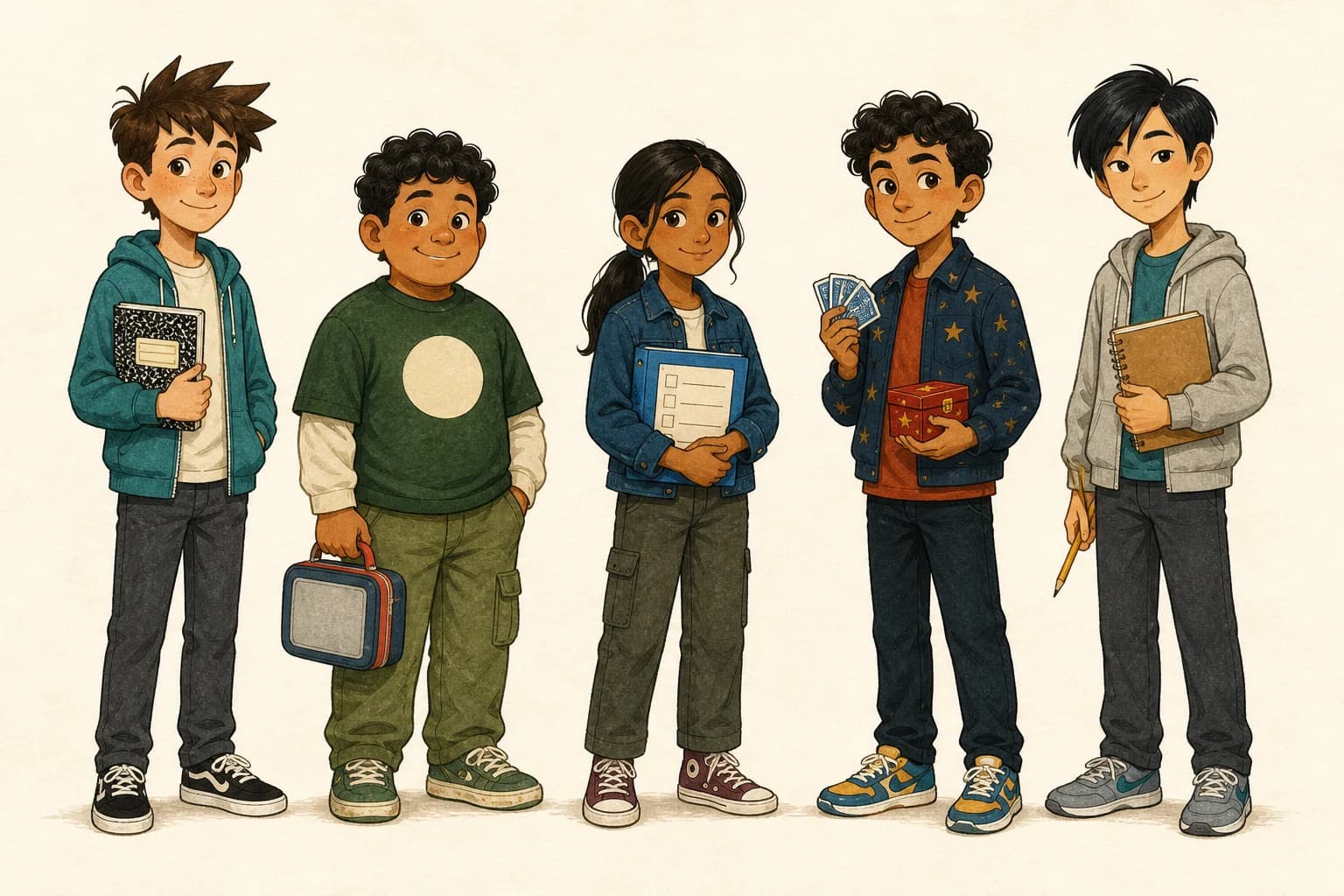
First impressionsA notebook under his arm. An idea in his head. Everyone else’s job already worked out.
Notebook keeper, owner of several excellent intentions
The more things go wrong, the more he wants a better plan. His friends may want a turn to speak first.
Would you stick to your brilliant idea if your friends had a different one?
Who’s your kind of trouble? Meet the notebook keeper, the snack expert, the rule checker, the magician, and the quiet kid with an idea.
Meet the whole crewTwo smaller forces with terrible timing
Please keep all important paperwork out of reach.
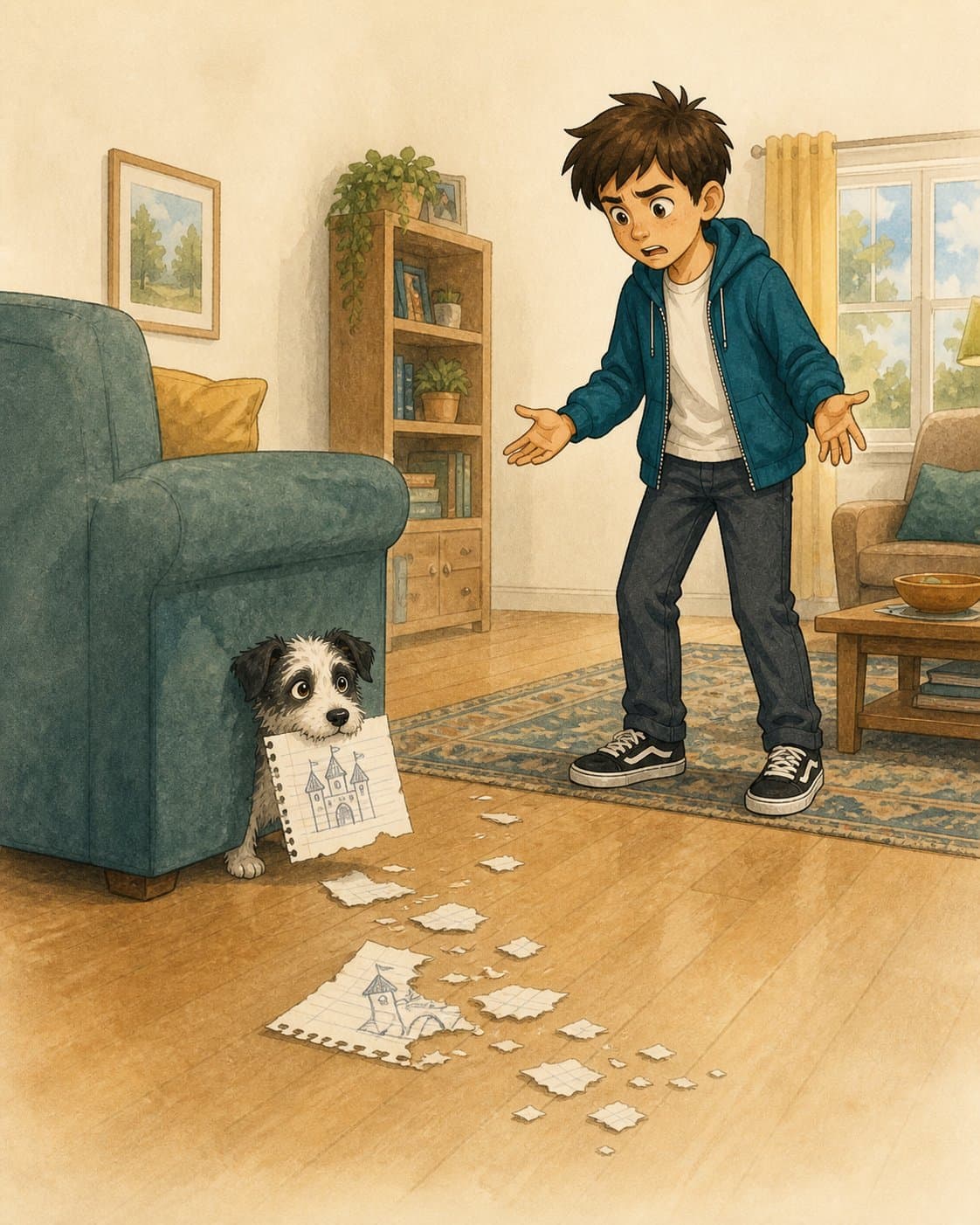
Sam’s dog. Paper is not safe.
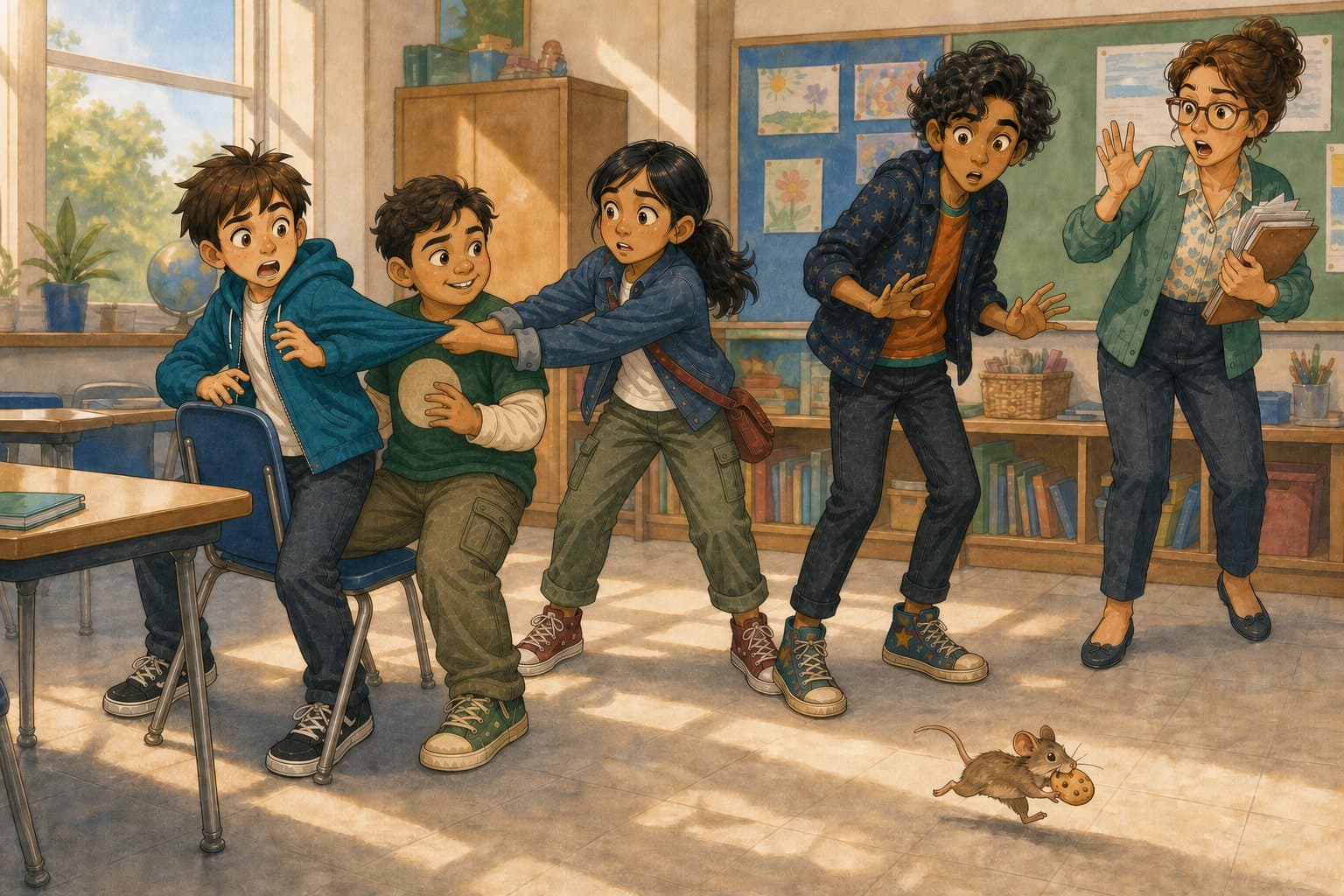
Class hamster. Small escape specialist.
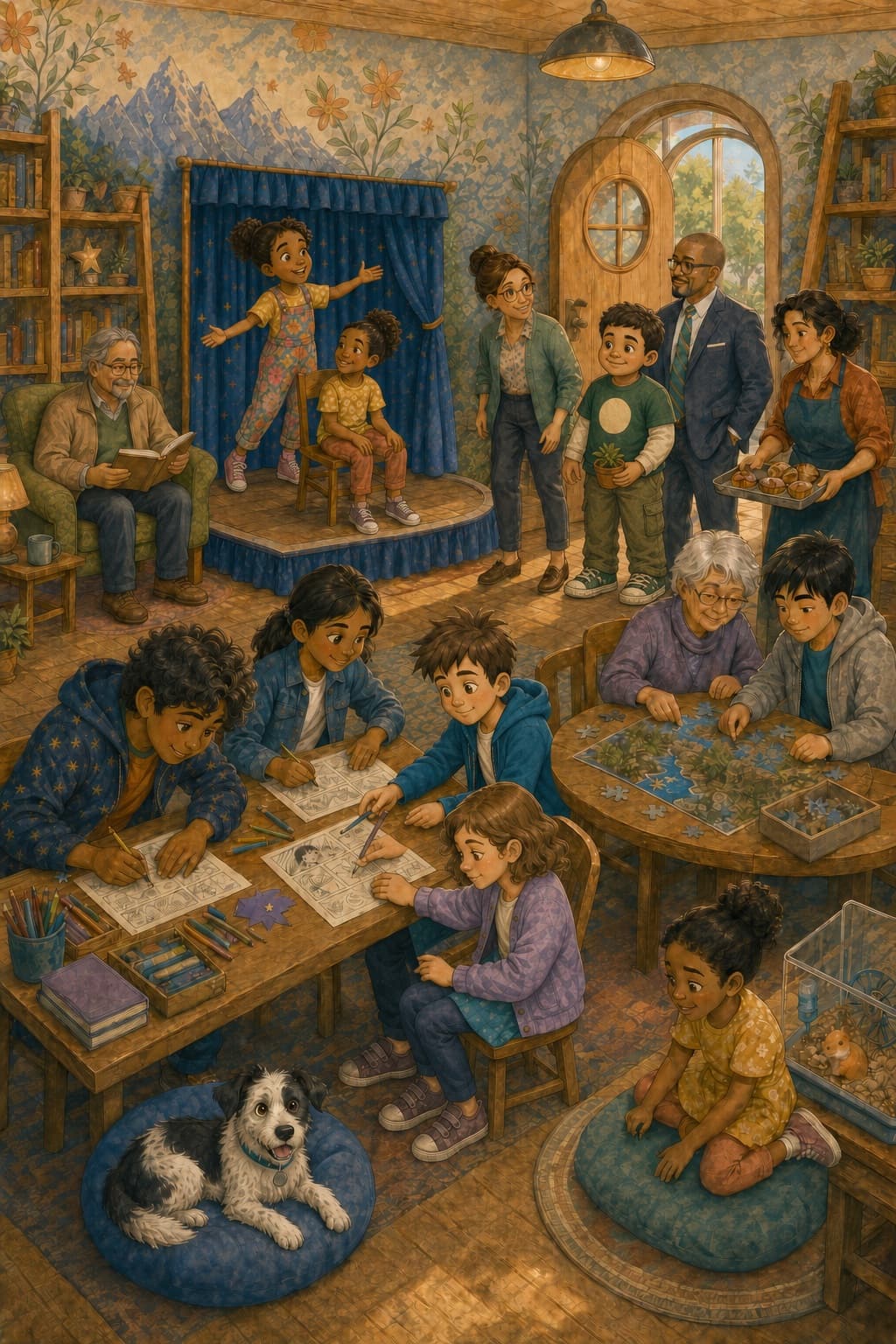
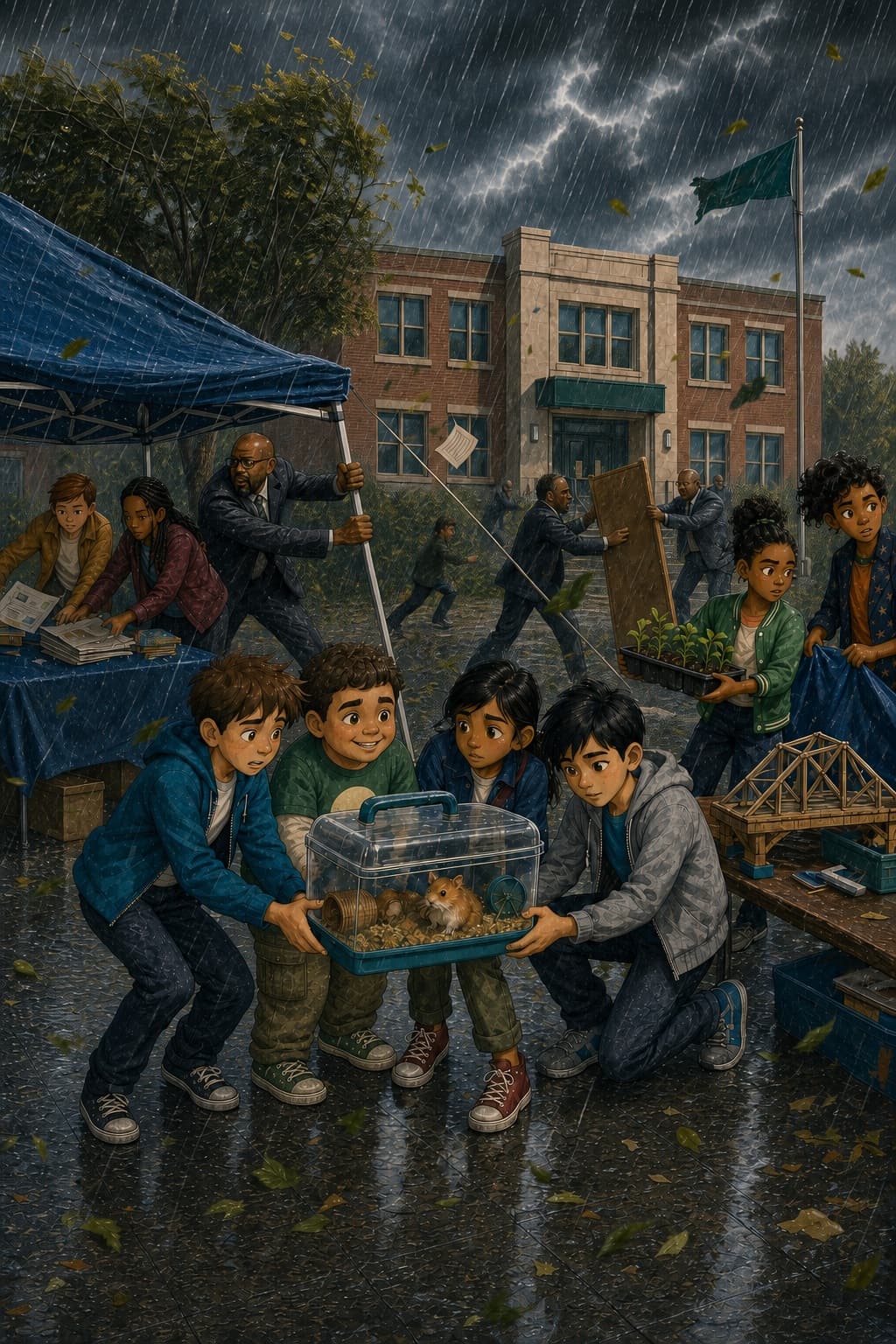
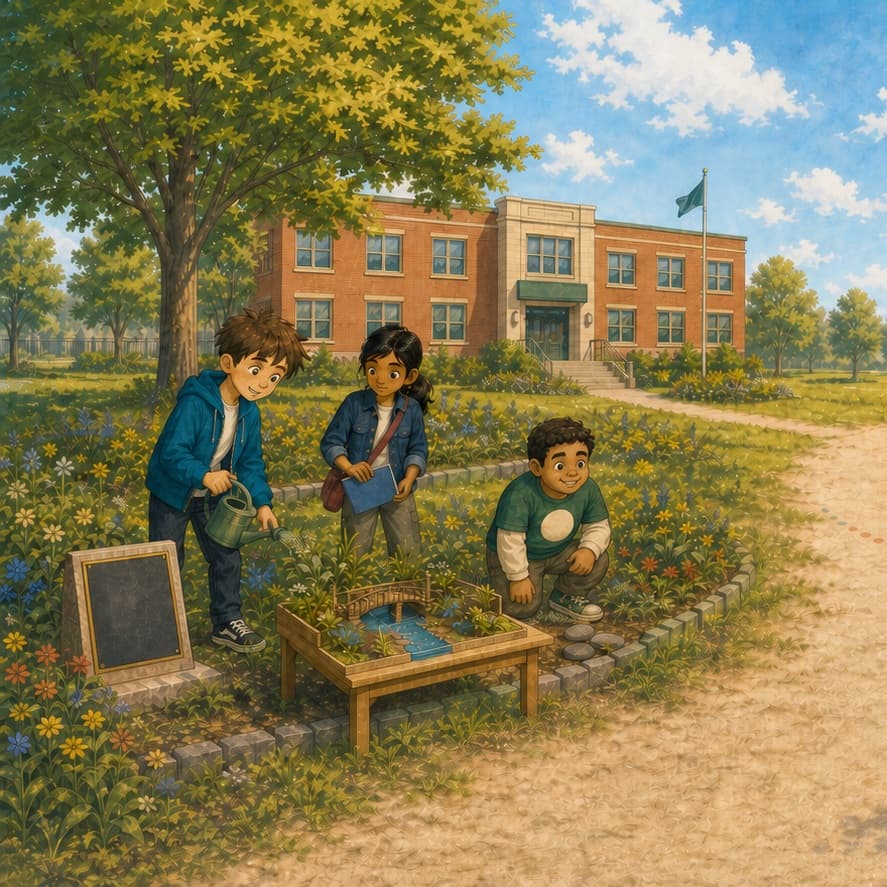
A few places the plan visits
For the grown-up choosing beside them
Read the opening together. If the notebook gets a laugh, keep going. You can also check the age range, themes, and reading format before choosing a copy.
01Page feelShort chapters and frequent pictures, with one continuous story.
02Emotional rangeFriendship tension and mistakes, without horror or graphic danger.
03The honest testRead the opening together and listen for curiosity.
It began with made-up stories and the small, serious request: “one more.”
Published now. One story. Four complete editions.
Your story. Your kind of copy. Read on a screen, curl up with a paperback, or give the hardback a home.
Every edition includes all 50 chapters and 100+ illustrations. Choose the format you’d enjoy most.
Your Amazon store
All four editions will open on Amazon.com.
Prices and delivery dates are on Amazon. You can change the suggested country.
Availability and delivery depend on the edition and your address.A little help choosing
Instant digital delivery
The complete story in a digital edition for readers who want to begin immediately.
Kindle availability varies by customer marketplace.See price & buyOn Amazon.comThe best first printed copy
The complete 176-page story in the lower-priced print edition.
Choose this when story and value matter most.See price & buyOn Amazon.comPremium color, soft cover
All 176 pages, with premium-color printing and a flexible soft cover.
For readers who love to linger over the pictures.See price & buyOn Amazon.comPremium color, hard cover
The complete illustrated story with premium-color pages and a sturdy hard cover.
A copy to give, share, and keep on the shelf.See price & buyOn Amazon.comSame complete story. Standard and premium paperbacks have the same 176 pages. Premium changes the color printing, not the chapters.
Checkout stays with Amazon. Amazon displays the final local price, tax, shipping, delivery, and returns. Your order is placed with Amazon, not this website.
Choose your way into the trouble
Start with the wrong notebook, follow the plan as it breaks, choose a favourite character, or find out how Sam’s world began.
Meet Sam, the notebook, and a printing mistake that should probably not have involved olives.
Read the opening →A notebook, a deadline, and five friends who do not agree on what happens next.
Follow the trouble →Sam narrates. Ben, Mia, Omar, and Leo have their own ideas about what actually happened.
Meet all five →Made-up family stories became Sam’s world, with Ali Babaee, his children, and Sana Naseri behind it.
Go behind the pages →Grown-ups can check age fit, content, and reading format in the straight-answer guide, or explore how planning and teamwork shape the story.