The children kept asking
Ali made up stories. His children wanted another. That repeated, ordinary moment was the first proof that a story could matter outside his own head.
Behind The Very Bad Plan
Before Sam had a notebook, Ali had an audience at home: his children. They listened to his made-up stories, laughed in the right places, asked inconvenient questions, and kept requesting another.
Meet Sam on page one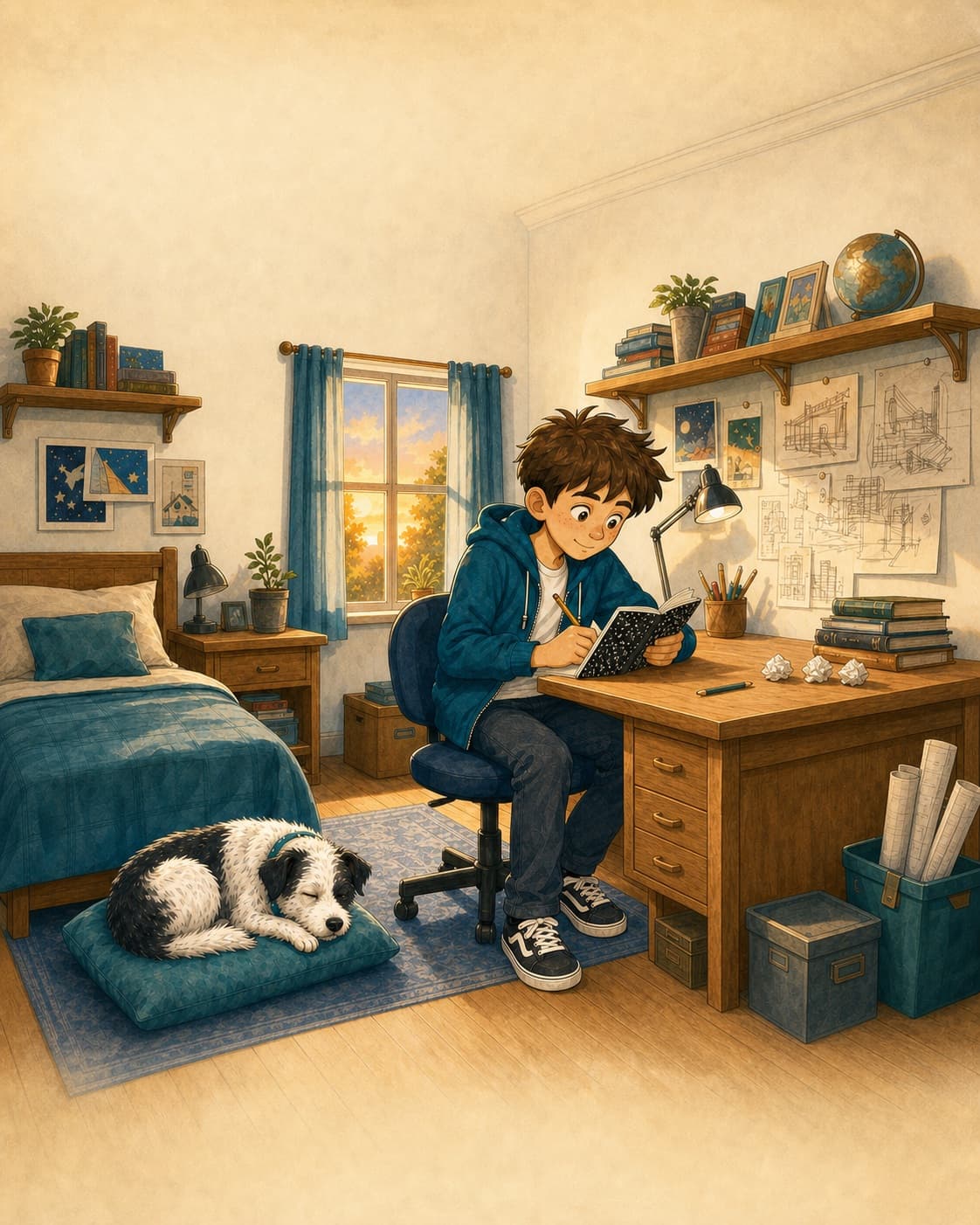
How the world got built
Ali made up stories. His children wanted another. That repeated, ordinary moment was the first proof that a story could matter outside his own head.
What if a child did everything “properly,” made the perfect plan, and still watched Tuesday knock it sideways?
He meant well. He prepared loudly. He learned where everyone could see it. The notebook became the safest place for his crossed-out certainty.
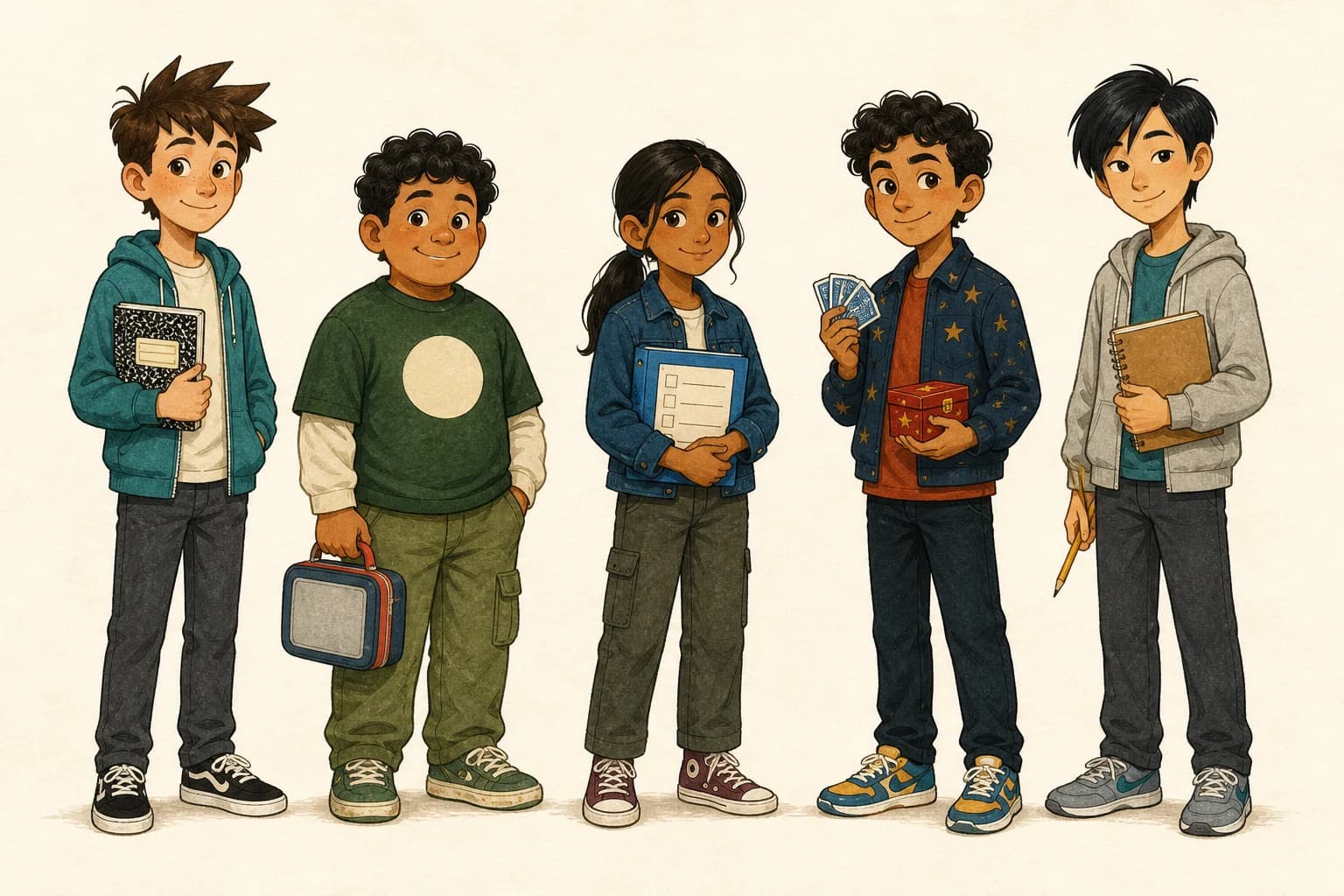
Ben, Mia, Omar, and Leo did not agree to be supporting evidence. Each saw a different hole in Sam’s answer. The story became theirs too.
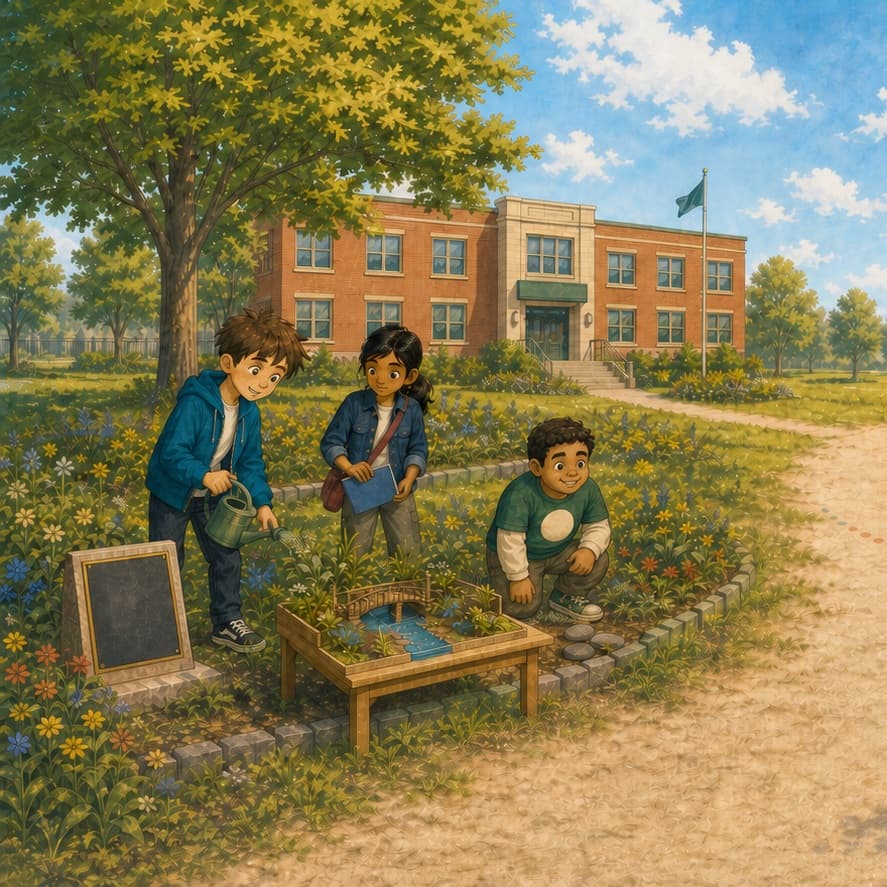
The spark behind the book
Children are honest audiences. They do not care that an idea took effort. They care whether they want the next bit. Their excitement persuaded Ali to stop treating the story as something temporary and give it chapters, characters, a world, and an ending worth reaching.
“Their excitement made me believe this story could belong to more families than ours.”Ali Babaee
Giving the story a visual memory
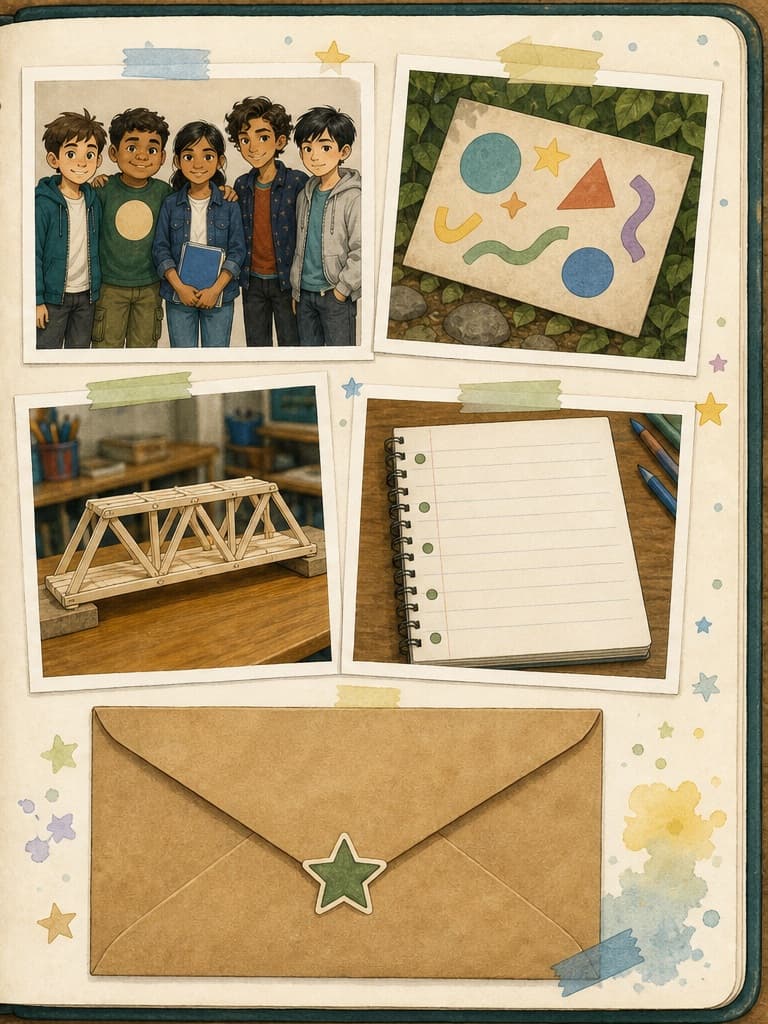
Sana Naseri worked on the visual concept development and image arrangement of The Very Bad Plan. The job was bigger than placing pictures between paragraphs. Sam had to remain Sam from one bad idea to the next. A warm room had to feel warm. A tense page had to know when to stop smiling.
Some images carry a joke. Some reveal who has noticed the problem. Some simply let the page breathe after a loud moment. Together, they had to feel like memories from one place.
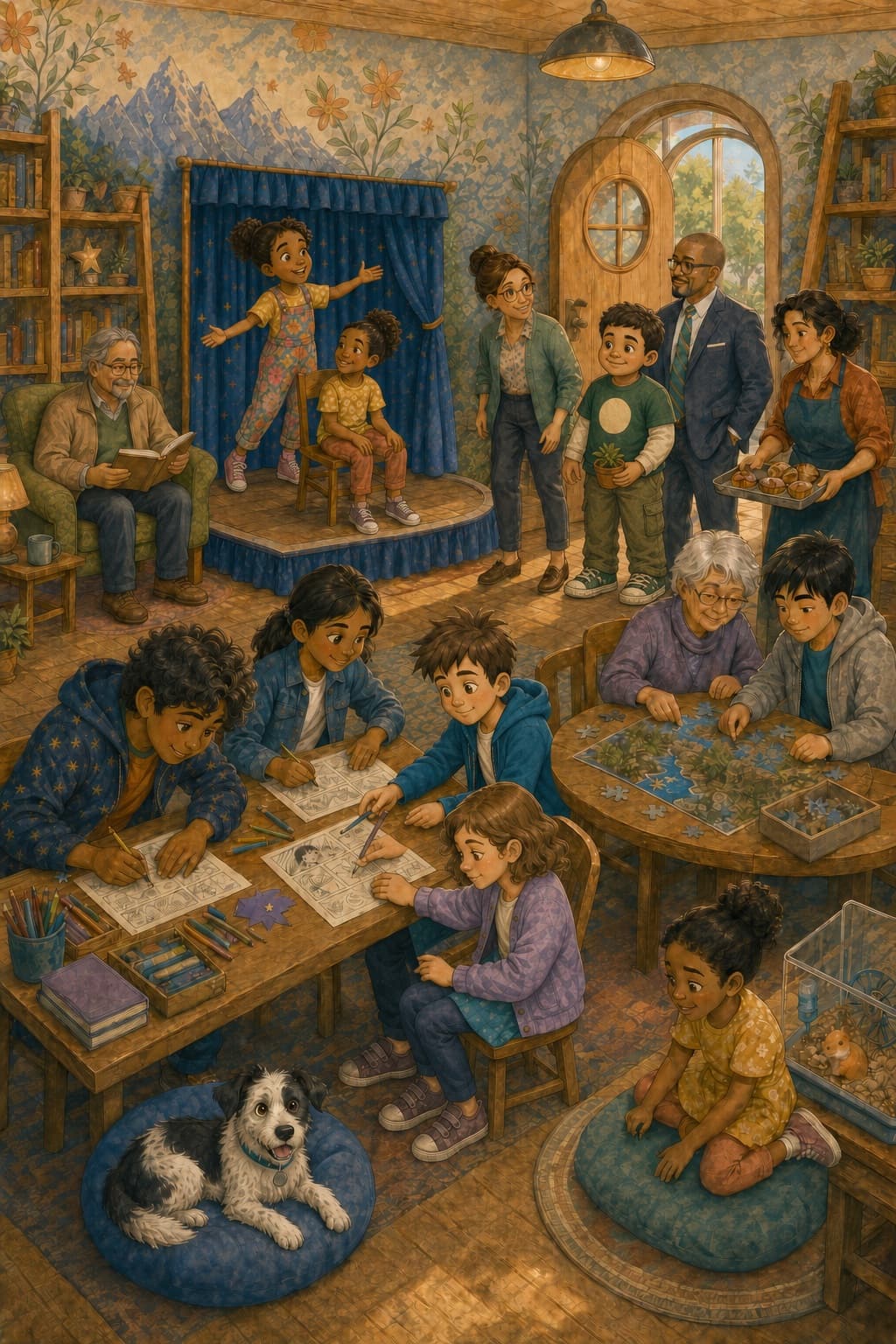
Rules written in pencil
If a lesson cannot survive the jokes, trouble, and choices, it does not get to interrupt the chapter.
Sam and his friends can be loud, stubborn, clever, wrong, kind, embarrassed, and still worth following.
Ben, Mia, Omar, and Leo are not there to clap when Sam succeeds. They change the answer.
A bad choice has consequences. It does not turn a child into a bad person.
Planning matters. When the people and the boxes disagree, the boxes have to move.
The door stays open
Sam, Ben, Mia, Omar, and Leo were built with voices, habits, relationships, and visual details that can travel. If the world later becomes audio, animation, or short stories, it should feel like meeting the same five children somewhere new, not watching strangers borrow their names.